Showing posts with label national heart disease awareness. Show all posts

Thursday, February 10, 2011

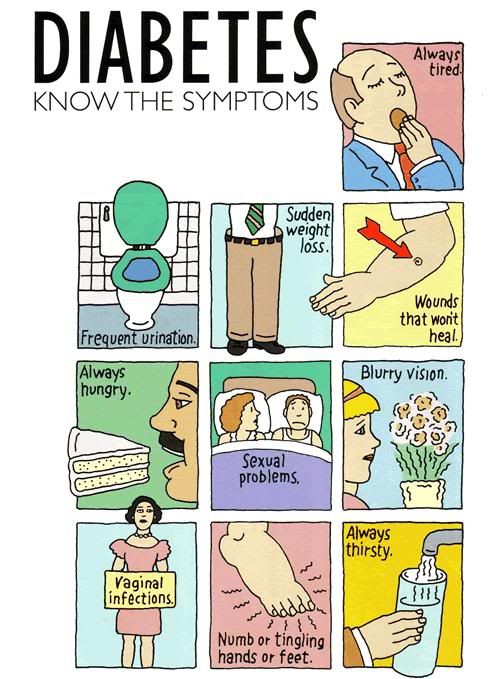
Blurry, Tired, Hungry, Tingly......

These symptoms could indicate Type 2 Diabetes.

Today we are continuing with Dr. Jamie McManus' letter on modifiable risk factors to reduce the risk of heart disease.  Do these describe you?  Read what can happen if left untreated and make changes.  If weight loss is indicated, follow www.Just10LBSWithLisa.blogspot.com for my journey.

To Your Health,
Lisa


Modifiable Risk Factor 4:  Having Type 2 Diabetes…This is a serious and increasingly common disease in which the body doesn’t properly use insulin, the hormone produced by the pancreas that is responsible for transporting sugar in the blood into cells of the body where it can be metabolized.  Left untreated, blood sugar levels increase and will damage blood vessels, thus increasing the risk of having a heart attack or stroke.  Being overweight and sedentary are two big risk factors for developing Type 2 Diabetes, and once again, modest weight loss can help prevent diabetes from developing in the first place.  If you already have diabetes, weight loss, improvements in your diet and the addition of fiber can help to naturally improve your blood sugar control.  Regular visits to your health care provider are critical if you already have diabetes.  If you have a family member with diabetes or you are overweight, have your doctor screen you for diabetes, which can often be without symptoms until it is advanced.

To Be Continued.....

Dr. Jamie McManus MD, FAAFP

Chairman, Medical Affairs, Health Sciences & Education
Shaklee Corporation

Wednesday, February 9, 2011

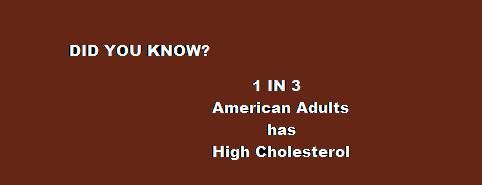
Did you know 1 in 3 American Adults....?


Today is Part 3 of a letter from Dr.Jamie McManus detailing modifiable risk factors to preventing Heart Disease.  I recently read that 1 in 3 American Adults have high cholesterol.  Read below for someways you can modify this risk factor.  Share with those you love.  Let's reach that 1 in 3 American Adults....

To Your Health,
Lisa


Modifiable Risk Factor 2: Having high blood cholesterol levels….

You can have high cholesterol and not know it because in the early phases of accumulation of cholesterol plaque in your arteries, there are no symptoms! This build-up of plaque can narrow your arteries and reduce blood flow ultimately leading to arterial blockage or blood clots in arteries that feed the heart and brain. This in turn can cause a heart attack or stroke. Lifestyle changes like improving your diet and increasing your physical activity can help lower your cholesterol. Consistently eating a diet rich in whole grains, fresh fruit, vegetables, legumes and low fat sources of protein (like soy protein) can help lower cholesterol and protect your heart. The FDA has recognized that the consumption of 25 grams or more of soy protein per day may reduce your risk of heart disease. Choosing healthy sources of fats is also incredibly important. You need to limit your intake of saturated fat (the type found in beef, butter, cheese, and regular fat dairy products) and completely avoid trans fats (found in fast foods, bakery products, packaged snack foods and some margarines) as these have been clearly linked to increasing the risk of heart disease. Simultaneously, it is prudent to switch to monounsaturated fats (found in olive oil, avocado, nuts, and seeds), as regular consumption of these fats has been shown to decrease your risk of heart disease. Another important heart healthy fat is omega-3 fatty acids, a type of polyunsaturated fat found in foods like fish and flaxseed that may also help protect your heart by decreasing your risk of heart attack, protect against irregular heartbeats, and help to lower triglycerides and blood pressure. Fiber is another important part of a healthy diet. Look for dark breads that contain at least 3 grams of fiber per serving and whole grain cereals that provide at least 6 grams of fiber per serving.


Fiber supplements that provide at least 5 grams of fiber, preferably a blend of soluble and insoluble fiber are a prudent addition for anyone dealing with elevated lipids.

To Be Continued.....

Dr. Jamie McManus MD, FAAFP

Chairman, Medical Affairs, Health Sciences & Education
Shaklee Corporation

Tuesday, February 8, 2011

Know the First Sign of Heart Disease in Men?

Know the

First Sign

     of

Heart Disease

  in Men? 


Sudden Death!


February is Heart Health Awareness Month and today is part 2 of a letter shared by Dr. Jamie McManus on real steps you can take now.  This is a risk factor I am working on modifying.  You can follow me or join along at www.Just10LBSwithLisa.blogspot.com.

To Your Health,
Lisa


Modifiable Risk Factors 1:  Being overweight or obese…

If you are like 65% of Americans who are overweight or obese, the number one thing you can do to reduce your risk of heart disease is to achieve a healthy weight.  Too much body fat, especially around your waist, puts you at higher risk.  Being overweight or obese also increases your risk of other conditions like high cholesterol and triglycerides, stroke and Type 2 Diabetes.  So by losing weight, you can begin to reduce your risk of heart disease.   And the good news is you don’t have to lose a lot of weight to start to improve your health.  Modest weight loss of even as little as 5-10% can significantly improve your cholesterol, blood pressure and risk of developing Type 2 Diabetes.

To Be Continued....

Dr. Jamie McManus MD, FAAFP

Chairman, Medical Affairs, Health Sciences & Education
Shaklee Corporation

Monday, February 7, 2011

#1 Killer of Women

 The #1 Killer of Women is Heart Disease.

February is Heart Health Awareness Month!  Many of you were asked to wear red this past Friday to help raise awareness.  Raising awareness is great if you are going to do something or you know what to do when you are aware.  Over the next several days I will be sharing portions of a letter from Dr. Jamie McManus advocating some real steps you can take now.  Keep coming back.

To Your Health,
Lisa

MODIFICATIONS YOU CAN MAKE TO SUPPORT YOUR HARDEST WORKING MUSCLE


Your heart – it beats an average 100,000 times a day and pumps the equivalent of 2,000 gallons of blood each day. Imagine what workhorses our hearts must be!…so vital to our life and yet not well taken care of by most of us. Heart disease continues to be the leading cause of death in the United States, claiming close to a million lives each year. Over 30 million Americans live with the burden of heart disease; 60 million Americans have been diagnosed with hypertension, a major risk factor for heart disease.

While traditionally considered a “man’s disease,” heart disease has become a serious health challenge for women as well. Cardiovascular disease kills over 500,000 women each year, more than the next seven causes of death combined. To give you a perspective, 1 in every 2.5 women will die of heart disease and stroke, compared to 2 in every 30 women who will die from breast cancer. What may be the most important information is that heart disease in women presents with different symptoms and physicians tend to under-diagnose the disease in women. In fact, more than half of women who die of coronary heart disease have either had no classic symptoms, or have been misdiagnosed as anxiety, stress or musculosketetal disorders. Part of the challenge comes from the fact that coronary artery disease in women tends to present with symptoms like shortness of breath or fatigue rather than the classic “crushing” substernal pain that is more typical in men. Research conduced by NIH with 515 women surprisingly revealed that fewer than 30% of women reported having chest pain or discomfort prior to their heart attacks, and 43% reported having no chest pain at all during any phase of the attack. The most common symptoms they reported were unusual fatigue, sleep disturbances, and shortness of breath. So, whether you are male or female, today is the day to put your heart health on the radar screen.

So, let’s talk about that you can do. First of all, let’s assess your risk and then determine what you can do to lower your risks. Yes, there is much you can do to hopefully prevent a catastrophic event from happening to you down the road!

The seven major risk factors for coronary artery disease are:

1) family history,
2) obesity,
3) hypertension,
4) elevated cholesterol and triglycerides,
5) Type 2 Diabetes,
6) smoking and
7) sedentary lifestyle.

Well, only one of these risk factors is not in your control. You cannot change your family history, but knowledge is good…so, if your family tree includes heart attacks, strokes, and diabetes, it behooves you to look at the other 6 risk factors – because these are all modifiable risks that you have control over! Knowing our risk factors is the first step in preventing heart disease. Once you know your risk factors, you can begin to take the steps needed to reducing your chances of developing heart disease.

To Be Continued......


Dr. Jamie McManus MD, FAAFP
Chairman, Medical Affairs, Health Sciences & Education
Shaklee Corporation
Monday, October 18, 2010

Don't Support Pink Washing!

Pinkwashing: A term used to describe companies that position themselves as leaders in the fight against breast cancer while engaging in practices that may be contributing to rising rates of the disease.


We’ve all seen personal care products dressed up with pink ribbons to “raise awareness” about breast cancer. Unfortunately, many of the corporations using the pink ribbon continue to use chemicals that are linked to cancer and hormone disruption. We need to shift the conversation toward disease prevention- and we can! We can use our voices, our dollars and our votes to support organizations, companies and elected officials that promise not to allow harmful chemicals in cosmetics and other products in the first place. That is a real commitments to women’s health.

Read more: http://healthychild.org/blog/comments/lets_tweet_twice/#ixzz12kn5MHrT


Greetings!

This blog post from Healthy Child/ Healthy World really struck a nerve with me....It has become really "in"  to be wearing pink ribbons, socks or bands to support cancer awareness.   That is great - if that is not all you are doing.  Did you know many of the products in your home, the same ones that are also sporting "Pink" this month are made of  carcinogens &/or other harmful toxic chemicals.  Toxins that are harming your health and the health of  the planet.  You take a stand with every dollar you spend.  If you purchase products from these manufacturers you are telling them you find this acceptable and they should continue....even if you are wearing the pink pin. 

Educate yourself about what you bring into your home at www.householdproducts.nlm.nih.gov/products.htm

If you are looking for alternatives - products that are safe for you, safe for your family and safe for the planet - do like I did and look to a company that has been walking the walk for 54 years - SHAKLEE.   If I can help you find substititutions - let me know.   

Lets stop pinkwashing and lets stop pink hypocricy.

To Your Health,
Lisa


Friday, February 5, 2010

Often the First Sign of Heart Disease is Sudden Death! What are you doing?

Go Red Day – Heart Health Month - Red Dress Fashion Show – Awareness

February has been named National Heart Disease Awareness Month.

It’s great to raise Heart Health Awareness – if you are going to take Action. By Action, I don’t mean wearing red.

I hate to be the one to break it to you, but wearing red today, tomorrow or even all month won’t make a difference in your heart health.

It’s not what you put ON your body.
It’s what you put IN your body that makes the difference.

If you truly want to reduce the incidences & risks of Heart Disease,
-Do something that has proven results on your Heart Health.


Click

http://healthmatters4u.myshaklee.com/us/en/whynow.html#/pop_videos.s.html

Choose the Video @ Shaklee Vitalizer, based on 3 years of Scientific Development & more than 50 years of Shaklee Scientific Leadership. Watch the Video & then answer the following 6 questions by copying & pasting into an email. Submit your answers by clicking contact me & receive CASH REBATE on this month’s Shaklee order.

1. Name 6 Health Benefits of Vitalizer.

2. Vitalizer was based on 12 Clinical Studies. Name the most recent.

3. List 3 results of the Shaklee Study Group.

4. Which nutrients are included in Vitalizer?

a. Multi-Vitamin
b. Vitamin B
c. Carotenoids
d. Vitamin C
e. Vitamin E
f. Omega 3
g. Acidopholus
h. Flavonoids
i. All of the Above

5. Higher incidences of what Nutrient leads to lower incidences of
Heart Disease & Sudden Death for Heart Disease.

6. What immediate benefits will you realize from Vitalizer?


If you have someone you would like to share this information with a friend, please do.

This isn’t like one of those emails where something horrible will happen to you if you don’t share this information in 24 hours.

However, you may want to share this with those you love.

It’s an Action that can actually make a difference in Heart Health.

What are people saying about Vitalizer?

“The daily vita-strips are so convenient.”

“Everyone around me is getting sick –

I’ve been taking Vitalizer and I seem to avoid catching what everyone else has.”

“I never have to remember to order with Auto-Ship & I love that having Auto-Ship gives me a 10% discount.”

“I am so much more consistent on my nutrients with Vitalizer.
It used to be that I ran out of something - & I would just go without.
Now everything is packaged in a 30 day supply. I don’t have to worry about the long term effects of missing key nutrients like Omega 3.”

“I have so much more ENERGY!”


Your Vitality is Showing.


What is it Saying? Take the Vitality Quiz Today!

http://www.shaklee.net/healthmatters4u/prodVitalizer00


To Your Health,
Lisa