Friday, May 20, 2011

Are You AWAKE !!!

When did you wake up?


I woke up about 14 years ago when I was educated about the toxins in our homes in are cleaning & personal care products while researching healthier options for our family when my young son was diagnosed ADHD  It made a difference !

If you are just waking up, you can make the change today.

Choose GET CLEAN and get 15% off now & in the future with FREE Shaklee membership today. http://www.letsbetoxinfree.com/

Like our FB page at http://www.facebook.com/home.php#!/pages/Lets-Be-Toxin-Free/143277115689170

To Your Health,
Lisa

Thursday, February 10, 2011

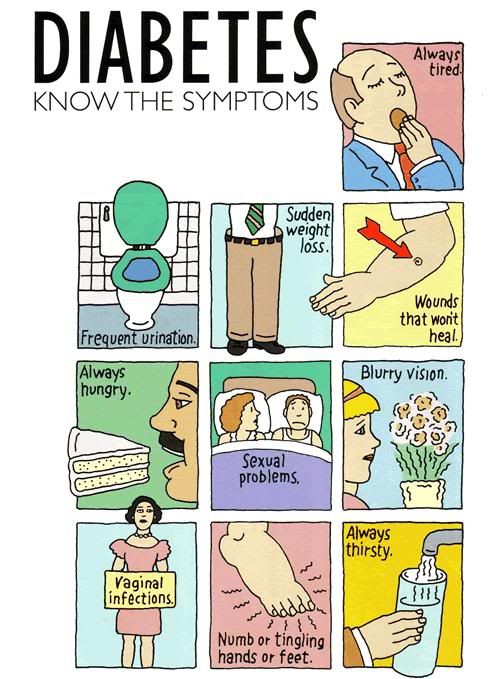
Blurry, Tired, Hungry, Tingly......

These symptoms could indicate Type 2 Diabetes.

Today we are continuing with Dr. Jamie McManus' letter on modifiable risk factors to reduce the risk of heart disease.  Do these describe you?  Read what can happen if left untreated and make changes.  If weight loss is indicated, follow www.Just10LBSWithLisa.blogspot.com for my journey.

To Your Health,
Lisa


Modifiable Risk Factor 4:  Having Type 2 Diabetes…This is a serious and increasingly common disease in which the body doesn’t properly use insulin, the hormone produced by the pancreas that is responsible for transporting sugar in the blood into cells of the body where it can be metabolized.  Left untreated, blood sugar levels increase and will damage blood vessels, thus increasing the risk of having a heart attack or stroke.  Being overweight and sedentary are two big risk factors for developing Type 2 Diabetes, and once again, modest weight loss can help prevent diabetes from developing in the first place.  If you already have diabetes, weight loss, improvements in your diet and the addition of fiber can help to naturally improve your blood sugar control.  Regular visits to your health care provider are critical if you already have diabetes.  If you have a family member with diabetes or you are overweight, have your doctor screen you for diabetes, which can often be without symptoms until it is advanced.

To Be Continued.....

Dr. Jamie McManus MD, FAAFP

Chairman, Medical Affairs, Health Sciences & Education
Shaklee Corporation

Wednesday, February 9, 2011

Did you know 1 in 3 American Adults....?


Today is Part 3 of a letter from Dr.Jamie McManus detailing modifiable risk factors to preventing Heart Disease.  I recently read that 1 in 3 American Adults have high cholesterol.  Read below for someways you can modify this risk factor.  Share with those you love.  Let's reach that 1 in 3 American Adults....

To Your Health,
Lisa


Modifiable Risk Factor 2: Having high blood cholesterol levels….

You can have high cholesterol and not know it because in the early phases of accumulation of cholesterol plaque in your arteries, there are no symptoms! This build-up of plaque can narrow your arteries and reduce blood flow ultimately leading to arterial blockage or blood clots in arteries that feed the heart and brain. This in turn can cause a heart attack or stroke. Lifestyle changes like improving your diet and increasing your physical activity can help lower your cholesterol. Consistently eating a diet rich in whole grains, fresh fruit, vegetables, legumes and low fat sources of protein (like soy protein) can help lower cholesterol and protect your heart. The FDA has recognized that the consumption of 25 grams or more of soy protein per day may reduce your risk of heart disease. Choosing healthy sources of fats is also incredibly important. You need to limit your intake of saturated fat (the type found in beef, butter, cheese, and regular fat dairy products) and completely avoid trans fats (found in fast foods, bakery products, packaged snack foods and some margarines) as these have been clearly linked to increasing the risk of heart disease. Simultaneously, it is prudent to switch to monounsaturated fats (found in olive oil, avocado, nuts, and seeds), as regular consumption of these fats has been shown to decrease your risk of heart disease. Another important heart healthy fat is omega-3 fatty acids, a type of polyunsaturated fat found in foods like fish and flaxseed that may also help protect your heart by decreasing your risk of heart attack, protect against irregular heartbeats, and help to lower triglycerides and blood pressure. Fiber is another important part of a healthy diet. Look for dark breads that contain at least 3 grams of fiber per serving and whole grain cereals that provide at least 6 grams of fiber per serving.


Fiber supplements that provide at least 5 grams of fiber, preferably a blend of soluble and insoluble fiber are a prudent addition for anyone dealing with elevated lipids.

To Be Continued.....

Dr. Jamie McManus MD, FAAFP

Chairman, Medical Affairs, Health Sciences & Education
Shaklee Corporation

Tuesday, February 8, 2011

Know the First Sign of Heart Disease in Men?

Know the

First Sign

     of

Heart Disease

  in Men


Sudden Death!


February is Heart Health Awareness Month and today is part 2 of a letter shared by Dr. Jamie McManus on real steps you can take now.  This is a risk factor I am working on modifying.  You can follow me or join along at www.Just10LBSwithLisa.blogspot.com.

To Your Health,
Lisa


Modifiable Risk Factors 1:  Being overweight or obese

If you are like 65% of Americans who are overweight or obese, the number one thing you can do to reduce your risk of heart disease is to achieve a healthy weight.  Too much body fat, especially around your waist, puts you at higher risk.  Being overweight or obese also increases your risk of other conditions like high cholesterol and triglycerides, stroke and Type 2 Diabetes.  So by losing weight, you can begin to reduce your risk of heart disease.   And the good news is you don’t have to lose a lot of weight to start to improve your health.  Modest weight loss of even as little as 5-10% can significantly improve your cholesterol, blood pressure and risk of developing Type 2 Diabetes.

To Be Continued....

Dr. Jamie McManus MD, FAAFP

Chairman, Medical Affairs, Health Sciences & Education
Shaklee Corporation

Monday, February 7, 2011

#1 Killer of Women

 The #1 Killer of Women is Heart Disease.

February is Heart Health Awareness Month!  Many of you were asked to wear red this past Friday to help raise awareness.  Raising awareness is great if you are going to do something or you know what to do when you are aware.  Over the next several days I will be sharing portions of a letter from Dr. Jamie McManus advocating some real steps you can take now.  Keep coming back.

To Your Health,
Lisa

MODIFICATIONS YOU CAN MAKE TO SUPPORT YOUR HARDEST WORKING MUSCLE


Your heart – it beats an average 100,000 times a day and pumps the equivalent of 2,000 gallons of blood each day. Imagine what workhorses our hearts must be!…so vital to our life and yet not well taken care of by most of us. Heart disease continues to be the leading cause of death in the United States, claiming close to a million lives each year. Over 30 million Americans live with the burden of heart disease; 60 million Americans have been diagnosed with hypertension, a major risk factor for heart disease.

While traditionally considered a “man’s disease,” heart disease has become a serious health challenge for women as well. Cardiovascular disease kills over 500,000 women each year, more than the next seven causes of death combined. To give you a perspective, 1 in every 2.5 women will die of heart disease and stroke, compared to 2 in every 30 women who will die from breast cancer. What may be the most important information is that heart disease in women presents with different symptoms and physicians tend to under-diagnose the disease in women. In fact, more than half of women who die of coronary heart disease have either had no classic symptoms, or have been misdiagnosed as anxiety, stress or musculosketetal disorders. Part of the challenge comes from the fact that coronary artery disease in women tends to present with symptoms like shortness of breath or fatigue rather than the classic “crushing” substernal pain that is more typical in men. Research conduced by NIH with 515 women surprisingly revealed that fewer than 30% of women reported having chest pain or discomfort prior to their heart attacks, and 43% reported having no chest pain at all during any phase of the attack. The most common symptoms they reported were unusual fatigue, sleep disturbances, and shortness of breath. So, whether you are male or female, today is the day to put your heart health on the radar screen.

So, let’s talk about that you can do. First of all, let’s assess your risk and then determine what you can do to lower your risks. Yes, there is much you can do to hopefully prevent a catastrophic event from happening to you down the road!

The seven major risk factors for coronary artery disease are:

1) family history,
2) obesity,
3) hypertension,
4) elevated cholesterol and triglycerides,
5) Type 2 Diabetes,
6) smoking and
7) sedentary lifestyle.

Well, only one of these risk factors is not in your control. You cannot change your family history, but knowledge is good…so, if your family tree includes heart attacks, strokes, and diabetes, it behooves you to look at the other 6 risk factors – because these are all modifiable risks that you have control over! Knowing our risk factors is the first step in preventing heart disease. Once you know your risk factors, you can begin to take the steps needed to reducing your chances of developing heart disease.

To Be Continued......


Dr. Jamie McManus MD, FAAFP
Chairman, Medical Affairs, Health Sciences & Education
Shaklee Corporation

Sunday, January 2, 2011

I Give A Shake!

Happy New Year!

We'd like to take this opportunity to tell you about a new project we are excited to be taking on for 2011.

As many of you know, our son Steven serves in the USMC. People often ask me how they can support our military members. We have taken on a project supporting an organization called "Operation Gratitude" and we are asking that you help make a difference along with us.

Operation Gratitude has shipped over 600,000 packages to our American Military deployed overseas. The packages consist of various items that our men and women in uniform can always use.

Carolyn Blashek, President of Operation Gratitude responded, "Yes!!!...” when asked if our Shaklee Cinch shakes could be of use. Her actual response was "Yes!!!, Those shakes would be fantastic and any amount would be wonderful". So far, Shaklee family members have donated over 200 packets and would really like to make an even bigger difference. Our goal is to supply them with over 100,000 packets! So we are asking for your support.

If every Shaklee business leader, member & friend would donate just 1 box of Cinch packets, we would easily meet our goal!

We've set up a page on our Shaklee Personal Website where you can learn more about the organization and or buy boxes of Cinch to be shipped to Operation Gratitude. Please feel free to visit http://www.igiveashake.com/ 

Once your order is place, please forward this email letter and webpage link to all your customers, friends, family, etc. This is a great way to support our deployed troops.

This will be an ongoing project for us, we hope it will be for you too. This is not a "have to", it's a possibility to do good with our wonderful Cinch shakes.

Let's make this a way to show our military how much we are grateful for their service. Let's be a part of taking care of the people who take care of us!

Please feel free to call if you have any questions, we are Eastern Standard Time :-)

Thank you for supporting our troops and saying I Give A Shake!

To Your Health!
Sincerely,
Lisa Sugrue
860-945-9677

Tuesday, December 21, 2010

Non-Toxic Craft

My friend, Kristina Diaz, made another appearance on Better CT and shared this *non-toxic craft to do with your children.  Enjoy! 

To Your Health,
Lisa

*If you decide to make them permanent by adding shellac, they will no longer be non-toxic.


http://www.wfsb.com/betterct/26204368/detail.html

Friday, December 17, 2010

The Hum-Bug and Happy of the Holidays

Dealing with stress is so important to you health.  I thought you would appreciate this article.

To Your Health,
Lisa

The Hum-Bug and Happy of the Holidays

By Sue Urda

Is it getting to you yet? Do you feel the pressure and push of the holiday season? And even though you’d like to be jolly and bright, you find yourself being a bit of a Scrooge? No worries. There are lots of people who feel this way on and off during the holiday season, and there IS hope!

Here are 9 Stress-Less Tips for the Holidays:

Get Connected – The holidays are the perfect time to deepen the connection and understanding you have with others. When you’re at a gathering, whether it is large or small, make a point of having intimate conversations and truly getting to know the people you are with. You’ll be surprised how open and fun they are when you show them that you are interested in them. You don’t have to be a great conversationalist; simply ask questions and see where it takes you.

Cross Some Things Off Your List. – You know that humongous list you wrote of all the baking and decorating and visiting and shopping you wrote? Well, most likely you’re not going to get it all done anyway, so why not strategically cross things off before you start. The holidays will be great without 22 different types of cookies. Really! Be reasonable and be flexible as you think about the time everything takes and be sure to include things on your list that you enjoy the most.

Pick a Theme for the Holidays – This year my theme is peace. Last year it was Fun. Decide in advance the most important feeling that you would like to feel and plan everything around your theme. Be sure to tell your family, friends and co-workers about your theme and you’ll find that they’ll contribute positively to it!

Set a Budget – Don’t get caught up in the whirlwind of the commercialism of the holidays and the massive sales events that have you spending way more money than is comfortable for you. If you start with a specific dollar amount in mind, it will help to narrow down your choices as you plan menus, travels, decorating and gift-giving.

Set Your Boundaries – The holidays are a time when we get together with our family members who we might not see very often, and each one of them has their own idea of what ‘should’ happen during the celebration. Be sure to speak up and put in motion the things that are important to you. And remember that it’s okay to say ‘no’ when you mean no.

Schedule ‘Me Time’ - I know, I know. You think there is no time for you and all the other things you want to do and get done. The truth is that if you don’t schedule time for yourself, you’ll end up frazzled and on edge. And we all know what happens next. So, be sure to plan time with friends or with a bubble bath. You and everyone you’re with will benefit from your down time.

Gift Giving From the Heart – Having to ‘exchange’ gifts seems so cold. Instead, think of gift giving as something you do in conjunction with the feelings in your heart. As you buy gifts, think of the person you love and picture them enjoying the gift you gave them. How much money should you spend? Whatever feels good and comfortable for you.

Reflect and Reminisce – The holidays are a great time to share memories and talk about the great times you have had. Asking relatives about family members who have passed is a great way to understand traditions and will also bring a better understanding of the family members surrounding you now.

GIVE THANKS! – Always express your gratitude for the people and events in your life. Be as vocal as possible and you’ll find that you start an epidemic, because gratitude is contagious just like happiness, love and joy. What do you have to be thankful for? Look around and be grateful for everyone and everything you see. That’s what the holidays are about after all!

Now that's Powerful!


ABOUT THE AUTHOR: Sue Urda is known as ‘The Connections Expert’. She is an Author, Speaker, Inspirer & Co-Founder of Powerful You! Women’s Network. Sue is a two-time honoree on INC Magazine’s list of the 500 Fastest-Growing Private Companies. Her award-winning book, Powerful Intentions Everyday Gratitude: 100 Transformational Days to Create a Life of Joy, Grace and Ease is designed to help you understand the complex workings of your mind, tap the inner wisdom of your heart & live each day through deliberate creation and intent. Sue assists women in their own pursuit of success, joyful-living & balance and her mission is to connect women to each other, their visions & themselves. www.sueurda.com

Sunday, December 12, 2010

Today Only - Special on Cholesterol Reduction Complex

I wanted to make sure you were aware of the Cholesterol Reduction Complex special that ends today.


15% off !

That's in addition to the the member pricing discounts.

And no limit!

Through tonight you would want to use this link of the special pricing. http://healthmatters4u.myshaklee.com/us/en/products.php?sku=89200 .

See how it works!

http://content.shaklee.com/shaklee/flash/show.php?video=CRC

If a new person purchases 2 and they will receive membership pricing! :)) It will offer FREE membership at checkout and adjust the pricing.

Here is a link to the testimonial from Chris Dzurnak in Torrington on the cholesterol. http://nosickvisits.blogspot.com/2010/11/high-cholesterol.html

Let me know if you have any questions. Feel free to contact me by phone or email.

To Your Health,
Lisa

Wednesday, December 8, 2010

The Real Dirt on Clean Water

Your Tap Water may look clean, but in a study conducted by the Enviromental Working Group (EWG), more than 300 pollutants were found in the drinking water in 45 states.  What can you do to help protect yourself and your family against potentially harmful contaminants?

According to the US, Environmental Protection Agency, public water untilities have violated the Safe Drinking Water Act - which has not been updated since 1996 - more than 700,000 times in the past seven years!

What's in Your Water?


Your tap water may not be as safe to drink as you think it is. It may contain lead from corroded pipes, atrazine (a common pesticide), discharge from industrial activity, and other contaminants you can’t necessarily see, taste, or smell. Over time, some contaminants may negatively impact your health. So which contaminants should you be on the lookout for?

• Disinfection by-products can form when chemicals used by local water utilities to kill water-borne microorganisms react with elements that sometimes may be present in the water.

• Heavy metals, including lead, are commonly present in pipes and can easily end up in your drinking glass. Even "lead-free" pipes are no exception; they can actually contain up to 8% lead.

• Agricultural pollutants not only threaten fish and wildlife, they can affect your health. One common pesticide to watch out for is atrazine. Although banned in Europe, over 70 million pounds of atrazine are currently used on farms across the United States.

• Industrial pollutants are prevalent in urban areas. One example of an industrial pollutant is benzene; up to 6 million pounds of this toxic chemical are released in the U.S. every year.

Long-term exposure to these contaminants may cause serious health problems—such as compromised kidney and liver function. And for young children, the risk is even greater. For example, long-term exposure to lead can cause reduced IQ, learning disabilities, and impaired growth.

Who's Responsible for Regulating Your Water?

So who's paying attention to the levels of all the pollutants in your water? Good question. More than half of the pollutants found in drinking water by the EWG are not held to any safety standards. And according to the U.S. Environmental Protection Agency, public water utilities have violated the Safe Drinking Water Act—which has not been updated since 1996—more than 700,000 times in the past seven years.

Who's Responsible for Regulating Your Water?

There are steps you can take to help safeguard yourself and your family against contaminants.1. Do your homework: Research how your water gets from your municipality to your home.

2. Take action: Purchase a water filtration system that’s independently certified to reduce contaminants in your water that may be hazardous to your health. Look for ones with the Water Quality Association (WQA) or National Sanitation Foundation (NSF) seal.

3. Take action: Purchase a water filtration system that’s independently certified to reduce contaminants in your water that may be hazardous to your health. Look for ones with the Water Quality Association (WQA) or National Sanitation Foundation (NSF) seal.


This is reposted from a Shaklee Wellness Update.  If you are concerned about your water, check out our special offer solution, providing you with 365 Days of Clean Water.
http://letsbetoxinfree.myshaklee.com/us/en/products.php?sku=89114


To Your Health,
Lisa


Monday, December 6, 2010

Do you know the PH level of your food?

Here is a humorous & very informative video explanation of PH and the effects on your body. If you drink sodas (even diet), you’ll find this interesting. 
http://www.youtube.com/watch?v=hpoAtwVyzZI


To Your Health,
Lisa

Saturday, December 4, 2010

Calcium and Vitamin D Intake

With all the news regarding Vitamin D in the press, I thought I'd share this letter from Dr. Jamie McManus.  Still wondering what you should be doing?  Take the quiz at linked at the end of this letter and find out.

To Your Health,
Lisa


New Calcium and Vitamin D Intake Recommendations –
                                              What You Need to Know

Hello Shaklee Family,

The Institute of Medicine (IOM) just released the report "Dietary Reference Intakes for Calcium and Vitamin D" that establishes higher recommended intake levels for vitamin D. The new Recommended Dietary Allowance (RDA) for children and adults ages 1-70 has been increased to 600 IU/day and the RDA for those aged 71+ has also been raised to 800 IU/day. The Tolerable Upper Intake Level was raised from 2,000 to 4,000 IU/day for adults. Calcium intake RDAs remained essentially the same with a range of 700 – 1,300 mg per day depending on age and sex. The full report can be accessed at http://www.iom.edu/Reports/2010/Dietary-Reference-Intakes-for-Calcium-and-Vitamin-D/Report-Brief.aspx.

We recognize that the goals of the IOM are to make broad-based recommendations for the entire population, and develop reference values that serve to guide nutrient guidelines for the US and Canada. We applaud the IOM for updating the vitamin D and calcium nutritional reference values established in 1997, for the potential far-reaching benefits to public health, but we also believe that such modest adjustments in recommended intakes may under-serve the many population groups who are at potential risk for low intakes of calcium and/or vitamin D..

We also want to take this opportunity to reiterate that Shaklee’s mission is to support optimal health for everyone, and in this case, we believe the potential benefits of calcium and vitamin D supplementation go well beyond simple nutritional adequacy and bone health. Scientific research links vitamin D inadequacy to an increased risk for certain cancers, cardiovascular disease, osteoporosis, and diabetes, and higher intakes of vitamin D may help reduce the risk of these diseases. These are precisely the reasons we conducted our own extensive review of the scientific literature and sponsored two independent vitamin D research studies. We also recently adjusted our individual vitamin D intake recommendations based on an individual’s risk factors for vitamin D insufficiency.

It has been estimated that as many as 80% of Americans may have “insufficient” blood levels of vitamin D and there are many reasons why low vitamin D levels seem to be commonplace today. The season or calendar month is a major risk factor for vitamin D insufficiency because sunlight is less efficient during winter months at triggering vitamin D production in the skin. The risk for vitamin D insufficiency rises as sunscreen use and time spent indoors increases. The latitude of your residence is another determinant of sun exposure and those with darker skin are less efficient at converting sunlight to vitamin D. Other factors that can increase risk for vitamin D inadequacy include increasing age, increasing body mass index, lack of exercise, and low intake of fish and other vitamin D rich foods in the diet.

While we support the IOM for the long-awaited adjustments to the calcium RDAs, increases to the vitamin D RDAs, and the increased Safe Upper Levels of Intake (UL) for vitamin D, we also remain committed to individualized and potentially higher vitamin D intake recommendations based on an individual’s unique vitamin D risk factor profile.


For more information about calcium, vitamin D, and your health, talk with your doctor or healthcare professional to discuss the steps you should take to achieve optimal calcium and vitamin D intakes. To obtain an individual vitamin D intake recommendation from Shaklee Health Sciences, based on your own risk factor profile, take the Vitamin D-Ology questionnaire at http://healthmatters4u.myshaklee.com/us/en/#/pop_VitaminD_quiz

Sending warmest regards,

Dr. Jamie McManus M.D.
Chairman, Medical Affairs and Health Sciences
Shaklee Corporation

Sunday, November 21, 2010

High Cholesterol ?

With 1 in 3 Americans having high cholesterol, here is a safe natural alternative to lowering cholesterol.  If you choose to get started, order 2 by November 30th, 2010 and get 15% off and a FREE Shaklee membership. 


This is a great video explanation of the new Cholesterol Reduction Complex.
http://www.betterhealthin31days.com/healthmatters4u/sv/CholesterolReductionComplex


Wondering if it will work for you?  Give it a try while continuing what you are doing currently.  Then have your cholesterol rechecked.  Check out Chris' experience in just 2 months.


To Your Health,
Lisa

I went to the Doctor yesterday to see how I am doing with my Cholesterol. I was really surprised to fond out that taking the Shaklee Cholesterol Reduction tablets for two months has dropped my levels from 141 LDL to just 97 LDL in the three month time frame. I did not do that well with just the Cholesterol medication by itself. I hope the next time I go I can get off the medication and just use the Shaklee product. I am really happy and hope that you will consider this product as well.

Chris

Monday, November 1, 2010

Toxin Free for Less

Check out this short video.

http://www.betterhealthin31days.com/healthmatters4u/sv/GetCleanProducts

This holiday season, give your family the gift of a Toxin Free home.

Change it all in November for less than $100. That's a savings of over $3000 from commercial toxic cleaners. 

Visit http://www.letsbetoxinfree.com/ and choose the Get Clean Kit.  Check out as a member.  Membership is FREE through November 30, 2010.  This will entitle you to 15% savings off this purchase and all future purchases as long a you continue as a Shaklee customer.

Want more details before you make a decision. 

Grab a cup of coffee or tea, relax & listen to this recording.  The health of your family is at stake.
 http://www.betterhealthin31days.com/healthmatters4u/kecd/GetClean

To Your Health,
Lisa

Thursday, October 28, 2010

Don't Try This At Home...Cleaner Reaction

Please Don't try this at  home...it could be hazardous to your health. 
Check out this photo and see the reaction when using products that can harm you.
Do you or someone you know use Ivory Snow and Clorox 2?


Jar with the red lid is Ivory Snow & Clorox 2 mixed then let sit. It bubbled over the top then formed this thick layer of gel.


Jar with the white lid is Shaklee Fresh Laundry & Nature Bright

Many people don't know there can be danger in mixing cleaning products together.

The fumes can be deadly & this type of reaction is not good for your plumbing.
You see there was NO reaction with the Shaklee products.

What do you want your family sleeping on and living in? 

To Your Health,
Lisa

Friday, October 22, 2010

The Worlds Best Breakfast !

You know how they say breakfast is the most important meal of the day.  It sets the tone for the rest of the day...Make a poor choice or no choice and  you will pay for it in effects on your blood sugar, energy, and mental focus.   Make the right choice and you have started your day full of energy, satiated til lunch, and able to accomplish whatever is on your list.  This is my favorite breakfast !   Cinch ! It comes in 4 different flavors - Vanilla, Chocolate, Cafe Latte or Strawberry.  It even comes in a Cinch Whey Protein version.  Then you can also mix it up for an infinite number of choices.  This morning I had Chocolate Cinch, 8 oz. of soy milk, 4 ice cubes and a teaspoon of instant coffee.   I had it ready to drink right after yoga class (it is a proven after work out drink...helps you maintain lean muscle mass. )  Thanks to Ashley for sharing these additional Chocolate Cinch Shake Recipes.

To Your Health,
Lisa


http://healthmatters4u.myshaklee.com/us/en/products.php?sku=20341

Monday, October 18, 2010

Don't Support Pink Washing!

Pinkwashing: A term used to describe companies that position themselves as leaders in the fight against breast cancer while engaging in practices that may be contributing to rising rates of the disease.


We’ve all seen personal care products dressed up with pink ribbons to “raise awareness” about breast cancer. Unfortunately, many of the corporations using the pink ribbon continue to use chemicals that are linked to cancer and hormone disruption. We need to shift the conversation toward disease prevention- and we can! We can use our voices, our dollars and our votes to support organizations, companies and elected officials that promise not to allow harmful chemicals in cosmetics and other products in the first place. That is a real commitments to women’s health.

Read more: http://healthychild.org/blog/comments/lets_tweet_twice/#ixzz12kn5MHrT


Greetings!

This blog post from Healthy Child/ Healthy World really struck a nerve with me....It has become really "in"  to be wearing pink ribbons, socks or bands to support cancer awareness.   That is great - if that is not all you are doing.  Did you know many of the products in your home, the same ones that are also sporting "Pink" this month are made of  carcinogens &/or other harmful toxic chemicals.  Toxins that are harming your health and the health of  the planet.  You take a stand with every dollar you spend.  If you purchase products from these manufacturers you are telling them you find this acceptable and they should continue....even if you are wearing the pink pin. 

Educate yourself about what you bring into your home at www.householdproducts.nlm.nih.gov/products.htm

If you are looking for alternatives - products that are safe for you, safe for your family and safe for the planet - do like I did and look to a company that has been walking the walk for 54 years - SHAKLEE.   If I can help you find substititutions - let me know.   

Lets stop pinkwashing and lets stop pink hypocricy.

To Your Health,
Lisa


Thursday, October 14, 2010

High Blood Pressure Falls from 220/120 to 155/85

VIVIX vs. HIGH BLOOD PRESSURE


In 2006, I entered the hospital because of elevated blood pressure which was 224/130, and was released after three days after they were able to bring it down to 180/120. I had a tightness in the middle of my chest, and my body was always so very hot. For one year I took 10mg of Lisinopril and 400mg of Levatolol and a water pill. My Blood Pressure continued to be elevated. I was only 40 years old at this time.

In 2007 I had a series of tests performed at Yale New Haven, with ten doctors taking part in it, only to be told that everything was normal. They were not able to find out what was causing the elevated Blood Pressure. They did prescribe three RX's and after taking them for three days, my gums began to bleed. I stopped taking everything and continued to live with the High Blood Pressure.

I should also mention that I am in fit condition, perfect weight, I exercise for 45 to 60 minutes in the AM and PM daily, and eat a healthy diet. I still have the elevated Blood Pressure, and the date is September 22, 2010.

I was introduced to Vivix by Shaklee, and anti aging tonic through the wife of one of my clients. She gave me a bottle to try and see if it would lower my Blood Pressure. I take 1 tsp.daily and here are the results in less than two weeks.

9/23/10...220/120
9/24/10...200/120
9/25/10...180/110
9/26/10...175/102
9/27/10...168/95
9/28/10...165/90
9/29/10...160/90
9/30/10...160/85
10/05/10..158/95
10/06/10..158/85

Today is 10/06/10 , and I just returned from seeing my doctor who I have check me monthly....he was very delighted to see how low my Blood Pressure was since my last visit. I told him what I was taking....Vivix by Shaklee, and I gave him my testimonial along with the Vivix brochure and he kept it, and said he may be using it.

I am so happy to see that something is working to lower my High Blood Pressure...the only thing I am doing differently is taking this one tsp. of Shaklee Vivix, which is an anti aging tonic daily. My wife noticed my body is back to normal temperature as well and I sleep through the night like a little baby and have lots of energy.

I thank God and Shaklee for this wonderful blessing of improved health.

Leon


Greetings !

Leon reports today...10/12/10.....his blood pressure is 155/85.....did I also mention he used to have this feeling of a lump in the crux of his throat when he would eat. It was like something was stuck and wouldn't go down. Well that feeling is gone and has been for over a week now. He is so full of energy and sleeps like a baby. He doesn't huff and puff when climbing stairs anymore. Praise God and Shaklee Vivix!!!

If you would like to receive the testimonial E-booklet, please fill out your informaton.


As always, if you feel this can help someone you care about, please pass it along!

To Your Health,
Lisa

Wednesday, October 13, 2010

Could Your Cleaners be Connected to Children's Health & Behavior?

I just received this email entitled "Chemicals" & Your Families Health.... .  This is very similar to my family story, although we were fortunate to find Shaklee prior to beginining any pharmaceutical route.


ASTHMA … DIGESTIVE AND RESPIRATORY ISSUES … DERMATITIS … ECZEMA … EYE AND SKIN BURNS … REPRODUCTIVE ISSUES … LIVER AND KIDNEY DAMAGE … HEADACHES

AND COULD YOUR CLEANERS BE CONNECTED TO YOUR CHILDREN’s BEHAVIOR??


Educate yourself about what you bring into your home at Household Products Database
 www.householdproducts.nlm.nih.gov/products.htm  and make concious decisions.  There are alternatives!

Email me and I would be happy to send you a pdf of popular cleaners and the ingredients that are causing harm to your family.  Feel free to browse my online catalog at the right for mentioned  products  or contact me if you want info to changes in your household.


Read Beth's story below....

To Your Health,
Lisa


My experience with Shaklee products began from a desperate need to get help for my son. He had been on Ritalin for two and one- half years.

What began as a "miracle drug" ended as a personality-altering nightmare.

At first, we were amazed at how he instantly became a good student. He was no longer in trouble all the time and had the ability to sit still and focus. He said "okay" when asked to perform simple tasks, and "thank
you" and " I'm sorry". He actually complimented his brothers! Our lifestyle as a family changed drastically and the constant tension was eased.

By the end of two and one-half years, however, the medication had taken its toll. It became a sedative that worked for a short time, but when it began to wear off, our son would become explosive. Once, when he was in a rage of frustration and anger, I asked him what was wrong, and all he could say, in fits of tears and thrashing, was, "I don't know, Mommy!! I don't know!!" He was nine years old.

At the same time, the Lord brought a new friend into my life. She "happened" to be a very experienced mother of four boys -two of whom were taking Shaklee supplements for ADHD. My husband and I decided to try the same program they were using, and we are so glad we did!

To summarize…our son is now able to be the person God made him to be.

Shortly after beginning the program, we came to know a boy we had never had the opportunity to know before. Not only did his creativity come back, but a thoughtful, kind, insightful attitude accompanied it. There
is a depth in him that the "focus" of medication limited. Ritalin kept him focused, but very shallow. He's free now to think and express himself in delightful and deeply thoughtful ways. He remains very active, which can be, honestly, quite trying at times. But his need for physical expression is minor compared to what we have gained. We've discovered that there are other answers for the behavior difficulties.

I had heard something about fumes from cleaning supplies causing children to be"hyper " and out of control. I gave it little thought until one day I was cleaning the bathroom with bleach and made myself sick with the
smell of Clorox bleach in my nostrils. I thought that if it could cause me, an adult, to feel so ill, what must it do to a child? Several days later, my boys were playing in the basement, and suddenly my oldest became very mean-spirited, bossy, and LOUD (does that sound familiar to any of you?!). Immediately I thought, "What has he had to eat?" I couldn't think of anything he'd eaten that would make him act this way.

Looking in the direction of the noise, I realized that the dishwasher was on. I couldn't imagine that it possibly could be the fumes from the dishwasher detergent; however, I decided to experiment during the next few days.

Each day, while my son was doing well, I'd turn on the dishwasher, and as soon as the steam began seeping out with the smell of detergent, he would go crazy!! It was as if he responded on cue: a phenomenon I would
not have believed if I hadn't seen it with my own eyes! Needless to say, we have changed to Basic D for the dishwasher, and we also use Basic H and G. I have seen no ill effects of these cleaners on my kids, and I
have watched my boys while I used the products, so that I could monitor any changes in their behavior.

Taking his supplements has been a part of my son's daily routine now for almost three years. By the way, until we began the Shaklee supplements, he and his brothers were in the doctor's office at least once every six weeks for this or that ailment. In the last three years, he has been to see the doctor one time!

I am so thankful for Shaklee and am glad that I can always trust the consistency of their products. Shaklee has given us so much hope for our son, and, the quality of our life as a family has dramatically improved.

Thank you, Shaklee! Beth Shaum

Tuesday, October 12, 2010

"Fall Behind" "D Ahead"

Pretty soon it will be time to change our clocks.  You know what they say Fall Behind - Spring Forward.  Well, I just got this from my friend Dr. Chaney and his take on how this relates to our Vitamin D needs.  Seems like great timing, because through October 17th you can get Vitamin D at 15% off!  Just click here.  Want to know exactly how much you should be taking?  Use the Vitamin D-Ology quiz.

To Your Health,
Lisa


In just a few weeks we will be told to "fall behind" - set our clocks back one hour as we go off Daylight Savings Time.

That's also a good time to "D ahead" - to increase our vitamin D intake.

That's because our bodies just don't make vitamin D as well during the winter months.

The very first step in making vitamin D occurs when our skin converts a metabolite of cholesterol to vitamin D3 or cholecalciferol - and that reaction depends on UV (ultraviolet) radiation from the sun.

From there the vitamin D3 travels to our liver where it is converted to 25-hydroxy vitamin D3 (the form of vitamin D that is measured in our blood).

And the 25-hydroxy vitamin D3 travels to our kidney where it is converted to 1,25-dihydroxy vitamin D3 - the active form of vitamin D that is responsible for building strong bones and conferring all of the other health benefits associated with vitamin D.

But the very first step in the process occurs in our skin and is absolutely dependent on exposure to UV radiation.

And when the sun is low in the sky, our UV exposure decreases significantly even if we spend just as much time outdoors and expose just as much skin surface - both of which are unlikely for the cold winter months.

So just remember each year when you are told to "Fall Behind" (set your clocks back) it's time to "D forward" your vitamin D intake - an increase of 1,000 IU/day will usually be sufficient.

And in the spring when you are told that it's time to "Spring Forward" (set your clocks ahead) it will be time to "D Behind" - decrease your vitamin D intake by about 1,000 IU/day.

To Your Health!

Dr. Stephen G Chaney